|
Assembly Actions -
Lowercase Senate Actions - UPPERCASE |
|
|---|---|
| Jan 08, 2014 |
referred to investigations and government operations |
| Jan 09, 2013 |
referred to investigations and government operations |
Senate Bill S1176
2013-2014 Legislative Session
Sponsored By

(R, C) 7th Senate District
Archive: Last Bill Status - In Senate Committee Investigations And Government Operations Committee
- Introduced
-
- In Committee Assembly
- In Committee Senate
-
- On Floor Calendar Assembly
- On Floor Calendar Senate
-
- Passed Assembly
- Passed Senate
- Delivered to Governor
- Signed By Governor
Actions
co-Sponsors

(R, C, IP, RFM) Senate District
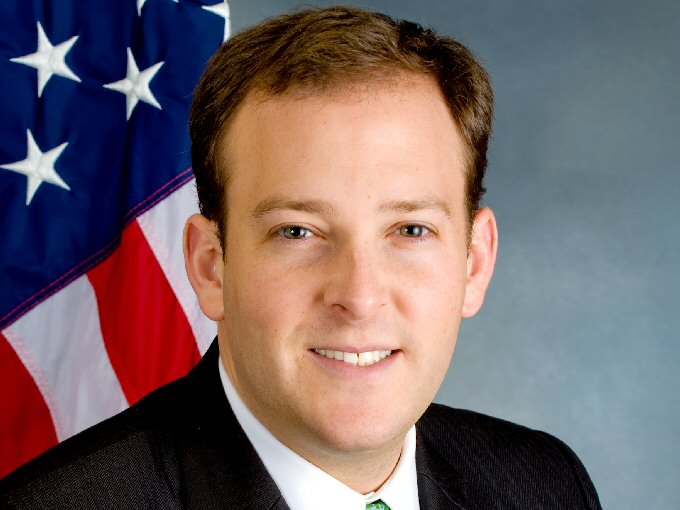
(R, C, IP) Senate District
2013-S1176 (ACTIVE) - Details
- See Assembly Version of this Bill:
- A5459
- Current Committee:
- Senate Investigations And Government Operations
- Law Section:
- Legislative Law
- Laws Affected:
- Add §51-a, Leg L
- Versions Introduced in Other Legislative Sessions:
-
2009-2010:
A5789
2011-2012: S3211, A1592
2015-2016: S1248, A5198
2017-2018: A5289
2013-S1176 (ACTIVE) - Summary
Restricts the imposition of additional unfunded mandates on local governments by the state until such time as those mandates are fully funded by the state; provides for certain exceptions; provides that a three-fifths majority in each house shall override this restriction.
2013-S1176 (ACTIVE) - Sponsor Memo
                                BILL NUMBER:S1176

TITLE OF BILL:
An act
to amend the legislative law, in relation to restricting the imposition
of unfunded mandates on political subdivisions of the state

PURPOSE OR GENERAL IDEA OF BILL:
Restricts the imposition of
certain unfunded mandates by the legislature on localities; and
provides that a three-fifths (3/5) super majority in each house shall
override this restriction.

SUMMARY OF SPECIFIC PROVISIONS:
Amends the Legislative Law by adding a new section 51-a that
provides as follows:

* Defines "political subdivision" and "qualifying bill".

* Prohibits the legislature from passing any bill - except those
explicitly exempted - that establishes a state program, significantly
changes services required to be provided by such program, or results
in a change in revenues or expenses of a political subdivision, if
the direct impact of the bill exceeds $10,000 per year for any
subdivision or $100,000 if more than one subdivision is affected,
unless the bill provides for state reimbursement to the affected
2013-S1176 (ACTIVE) - Bill Text download pdf
                    S T A T E   O F   N E W   Y O R K
________________________________________________________________________

                                  1176

                       2013-2014 Regular Sessions

                            I N  S E N A T E

                               (PREFILED)

                             January 9, 2013
                               ___________

Introduced  by  Sens. MARTINS, SEWARD -- read twice and ordered printed,
  and when printed to be committed to the  Committee  on  Investigations
  and Government Operations

AN  ACT  to  amend  the  legislative law, in relation to restricting the
  imposition of unfunded mandates on political subdivisions of the state

  THE PEOPLE OF THE STATE OF NEW YORK, REPRESENTED IN SENATE AND  ASSEM-
BLY, DO ENACT AS FOLLOWS:

  Section 1. Legislative findings and intent. The legislature finds that
state  government  imposes  numerous program and service requirements on
its local governments without fully considering the  fiscal  impacts  of
these  requirements.  Such  unfunded  mandates require local governments
already experiencing considerable economic hardship to  provide  new  or
significantly  expanded programs and services without the funding neces-
sary to carry out those mandates. Because  unfunded  mandates  aggravate
the  fiscal difficulty that some local governments are now experiencing,
the state must consider the burdens of unfunded mandates before imposing
additional such  requirements  on  local  governments.  The  legislature
therefore  declares that it is appropriate that state government provide
funding for mandates it imposes on local governments.
  The legislature also finds that some mandates are critical to preserv-
ing the health, safety and welfare of the people of the  state.  Because
it  is  impractical  to  shift  immediately to full state funding of all
state mandates, and recognizing the need  to  curtail  the  transfer  of
program  and  service  expenses from the state to local governments, the
legislature declares its intent to restrict the imposition of additional
unfunded mandates on local governments until such time as these mandates
are fully funded by the state.
  S 2. The legislative law is amended by adding a new  section  51-a  to
read as follows:

 EXPLANATION--Matter in ITALICS (underscored) is new; matter in brackets
                      [ ] is old law to be omitted.
                                                           LBD04792-01-3
Comments
Open Legislation is a forum for New York State legislation. All comments are subject to review and community moderation is encouraged.
Comments deemed off-topic, commercial, campaign-related, self-promotional; or that contain profanity, hate or toxic speech; or that link to sites outside of the nysenate.gov domain are not permitted, and will not be published. Attempts to intimidate and silence contributors or deliberately deceive the public, including excessive or extraneous posting/posts, or coordinated activity, are prohibited and may result in the temporary or permanent banning of the user. Comment moderation is generally performed Monday through Friday. By contributing or voting you agree to the Terms of Participation and verify you are over 13.
Create an account. An account allows you to sign petitions with a single click, officially support or oppose key legislation, and follow issues, committees, and bills that matter to you. When you create an account, you agree to this platform's terms of participation.