|
Assembly Actions -
Lowercase Senate Actions - UPPERCASE |
|
|---|---|
| Jan 04, 2012 |
referred to social services |
| Jan 06, 2011 |
referred to social services |
Senate Bill S1326
2011-2012 Legislative Session
Sponsored By
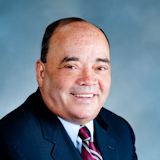
(D) Senate District
Archive: Last Bill Status - In Senate Committee Social Services Committee
- Introduced
-
- In Committee Assembly
- In Committee Senate
-
- On Floor Calendar Assembly
- On Floor Calendar Senate
-
- Passed Assembly
- Passed Senate
- Delivered to Governor
- Signed By Governor
Actions
co-Sponsors

(D) Senate District

(D) Senate District

(D, WF) 21st Senate District

(D) 11th Senate District
2011-S1326 (ACTIVE) - Details
- See Assembly Version of this Bill:
- A2957
- Current Committee:
- Senate Social Services
- Law Section:
- Social Services Law
- Laws Affected:
- Amd §332-b, Soc Serv L
- Versions Introduced in Other Legislative Sessions:
-
2009-2010:
S5547, A1417
2013-2014: S428, A2960
2015-2016: S1840, A3450
2017-2018: S4195, A3045
2019-2020: S4584, S4641, A4236, A8994
2021-2022: A3149
2011-S1326 (ACTIVE) - Summary
Provides factors to be considered when a health care practitioner's opinion differs from that of referral's treating health care practitioner as to a disability; requires such health care practitioner to provide an explicit written determination and to present evidence when such practitioner's diagnosis differs from that of the treating health care practitioner who referred the patient.
2011-S1326 (ACTIVE) - Sponsor Memo
                                BILL NUMBER:S1326

TITLE OF BILL:
An act
to amend the social services law, in relation to establishing factors to
be considered when a health care practitioner  upon examination has a
different opinion from an applicant's treating health care
practitioner's opinion as to
an applicant's disability; and requiring
an explicit written
determination by the health care practitioner when the diagnoses differ

PURPOSE:
To ensure that the opinions and determinations of a public assistance
applicant's treating health care practitioner are given sufficient
weight when making disability determinations.

SUMMARY OF PROVISIONS:
Section 1 amends section 332-b of the social services law, by
which provides that if a public
assistance applicant is sent to a practitioner to determine if the
applicant has any work limitations, the practitioner must take into
account the applicant's treating health care practitioner's opinion,
and give it sufficient weight based on a number of factors.

EXISTING LAW:
2011-S1326 (ACTIVE) - Bill Text download pdf
                    S T A T E   O F   N E W   Y O R K
________________________________________________________________________

                                  1326

                       2011-2012 Regular Sessions

                            I N  S E N A T E

                             January 6, 2011
                               ___________

Introduced by Sens. DILAN, DIAZ, PARKER -- read twice and ordered print-
  ed,  and  when  printed  to  be  committed  to the Committee on Social
  Services

AN ACT to amend the social services law,  in  relation  to  establishing
  factors  to  be considered when a health care practitioner  upon exam-
  ination has a different opinion from an  applicant's  treating  health
  care  practitioner's  opinion  as  to  an  applicant's disability; and
  requiring an explicit written determination by the health care practi-
  tioner when the diagnoses differ

  THE PEOPLE OF THE STATE OF NEW YORK, REPRESENTED IN SENATE AND  ASSEM-
BLY, DO ENACT AS FOLLOWS:

  Section  1.  Section  332-b  of  the social services law is amended by
adding two new subdivisions 4-a and 4-b to read as follows:
  4-A. IF THE PRACTITIONER TO WHOM THE INDIVIDUAL IS  REFERRED  PURSUANT
TO  SUBDIVISION FOUR OR PARAGRAPH (B) OF SUBDIVISION TWO OF THIS SECTION
ISSUES AN OPINION THAT DIFFERS FROM THE APPLICANT'S TREATING HEALTH CARE
PRACTITIONER, THE PRACTITIONER MUST PROVIDE AN EXPLICIT WRITTEN DETERMI-
NATION AS TO WHY THE PRACTITIONER DISAGREES WITH THE APPLICANT'S  TREAT-
ING  HEALTH  CARE  PRACTITIONER'S  DISABILITY  DETERMINATION AND PRESENT
EVIDENCE THAT SUPPORTS THE OPINION.
  4-B. IN THE EVENT THE PRACTITIONER TO WHOM THE INDIVIDUAL IS  REFERRED
PURSUANT TO SUBDIVISION FOUR OR PARAGRAPH (B) OF SUBDIVISION TWO OF THIS
SECTION  ISSUES  AN  OPINION  THAT DIFFERS FROM THE APPLICANT'S TREATING
HEALTH CARE PRACTITIONER'S OPINION, THE APPLICANT'S TREATING HEALTH CARE
PRACTITIONER'S OPINION IS GENERALLY CONTROLLING,  SUBJECT  TO,  BUT  NOT
LIMITED TO, THE FOLLOWING FACTORS:
  (A) THE LENGTH AND FREQUENCY OF THE TREATMENT PROVIDED,
  (B) CONSISTENCY OF THE OPINION WITH THE RECORD AS A WHOLE,
  (C) THE DEGREE TO WHICH THE OPINION IS SUPPORTED BY CONCRETE EVIDENCE,
AND
  (D) THE PRACTITIONER'S SPECIALTY.
  S  2.  This  act shall take effect on the ninetieth day after it shall
have become a law.

 EXPLANATION--Matter in ITALICS (underscored) is new; matter in brackets
Comments
Open Legislation is a forum for New York State legislation. All comments are subject to review and community moderation is encouraged.
Comments deemed off-topic, commercial, campaign-related, self-promotional; or that contain profanity, hate or toxic speech; or that link to sites outside of the nysenate.gov domain are not permitted, and will not be published. Attempts to intimidate and silence contributors or deliberately deceive the public, including excessive or extraneous posting/posts, or coordinated activity, are prohibited and may result in the temporary or permanent banning of the user. Comment moderation is generally performed Monday through Friday. By contributing or voting you agree to the Terms of Participation and verify you are over 13.
Create an account. An account allows you to sign petitions with a single click, officially support or oppose key legislation, and follow issues, committees, and bills that matter to you. When you create an account, you agree to this platform's terms of participation.