|
Assembly Actions -
Lowercase Senate Actions - UPPERCASE |
|
|---|---|
| Jun 11, 2014 |
referred to codes delivered to assembly passed senate ordered to third reading cal.1286 committee discharged and committed to rules |
| Jun 03, 2014 |
reported and committed to finance |
| Jan 08, 2014 |
referred to crime victims, crime and correction returned to senate died in assembly |
| Jun 11, 2013 |
referred to codes delivered to assembly passed senate |
| Jun 10, 2013 |
advanced to third reading |
| Jun 05, 2013 |
2nd report cal. |
| Jun 04, 2013 |
1st report cal.995 |
| May 20, 2013 |
reported and committed to finance |
| Jan 17, 2013 |
referred to crime victims, crime and correction |
Senate Bill S2459
2013-2014 Legislative Session
Provides that certain sex offenders who are released on parole or sentenced to probation may not enter public, association or free libraries
download bill text pdfSponsored By
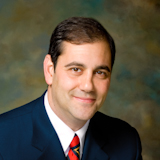
(R, C, IP, RFM) 24th Senate District
Archive: Last Bill Status - In Assembly Committee
- Introduced
-
- In Committee Assembly
- In Committee Senate
-
- On Floor Calendar Assembly
- On Floor Calendar Senate
-
- Passed Assembly
- Passed Senate
- Delivered to Governor
- Signed By Governor
Actions
Votes
-
-
-
-
Floor Vote: Jun 11, 2014
aye (56)- Addabbo Jr.
- Avella
- Ball
- Bonacic
- Boyle
- Breslin
- Carlucci
- DeFrancisco
- Diaz
- Dilan
- Farley
- Felder
- Flanagan
- Gallivan
- Gianaris
- Gipson
- Golden
- Griffo
- Grisanti
- Hannon
- Hoylman-Sigal
- Kennedy
- Klein
- Krueger
- LaValle
- Lanza
- Larkin
- Latimer
- Libous
- Little
- Marcellino
- Marchione
- Martins
- Maziarz
- Nozzolio
- O'Brien
- O'Mara
- Parker
- Peralta
- Ranzenhofer
- Ritchie
- Rivera
- Robach
- Sampson
- Sanders Jr.
- Savino
- Serrano
- Seward
- Skelos
- Squadron
- Stavisky
- Stewart-Cousins
- Tkaczyk
- Valesky
- Young
- Zeldin
nay (2)excused (3)
-
-
-
Floor Vote: Jun 11, 2013
aye (56)- Addabbo Jr.
- Avella
- Ball
- Bonacic
- Boyle
- Breslin
- Carlucci
- DeFrancisco
- Diaz
- Dilan
- Espaillat
- Farley
- Felder
- Flanagan
- Fuschillo
- Gallivan
- Gianaris
- Gipson
- Golden
- Griffo
- Grisanti
- Hannon
- Kennedy
- Klein
- Krueger
- LaValle
- Lanza
- Larkin
- Latimer
- Libous
- Little
- Marcellino
- Marchione
- Martins
- Maziarz
- Nozzolio
- O'Brien
- O'Mara
- Peralta
- Ranzenhofer
- Ritchie
- Rivera
- Robach
- Sampson
- Sanders Jr.
- Savino
- Serrano
- Seward
- Skelos
- Smith
- Stavisky
- Stewart-Cousins
- Tkaczyk
- Valesky
- Young
- Zeldin
excused (1)
-
Jun 11, 2014 - Rules Committee Vote
S245921Aye0Nay2Aye with Reservations0Absent2Excused0AbstainedJun 4, 2013 - Finance Committee Vote
S245932Aye3Nay2Aye with Reservations0Absent0Excused0Abstained-
-
Finance Committee Vote: Jun 4, 2013
aye (32)nay (3)
-
Jun 3, 2014 - Crime Victims, Crime And Correction Committee Vote
S24599Aye2Nay2Aye with Reservations0Absent0Excused0Abstained-
-
Crime Victims, Crime And Correction Committee Vote: Jun 3, 2014
nay (2)aye wr (2)
-
May 20, 2013 - Crime Victims, Crime And Correction Committee Vote
S24599Aye2Nay2Aye with Reservations0Absent0Excused0Abstained-
-
Crime Victims, Crime And Correction Committee Vote: May 20, 2013
nay (2)aye wr (2)
-
-
-
co-Sponsors

(R, C) 60th Senate District
2013-S2459 (ACTIVE) - Details
2013-S2459 (ACTIVE) - Sponsor Memo
                                BILL NUMBER:S2459

TITLE OF BILL:
An act
to amend the executive law and the penal law,
in relation to preventing certain sex
offenders who are released on parole
or sentenced to probation
from entering public, association
or free libraries

PURPOSE:
Provides that certain sex offenders who are released on parole or
sentenced to probation may not enter public, association or free
libraries.

SUMMARY OF PROVISIONS:

Section one amends subdivision 14 of section 259-C of the executive
law as amended by section 38-b of subpart A of part C of chapter 62
of the laws of 2011 to state that where a person serving a sentence
for an offense defined in article one hundred thirty, one hundred
thirty five ox two hundred sixty three of the penal law, and the
victim of such offense was under the age of eighteen at the time of
such offense or such person has been designated a level three sex
offender, is released on parole or conditionally released pursuant to
subdivision one or two of this section, the board shall require, that
such sentenced offender shall refrain from knowingly entering into or
upon any school grounds, as that term is defined in subdivision
fourteen of section 220.00 of the penal law, or any public library,
association library or free library, as defined in subdivision two of
section two hundred fifty-three of the education law.

Section two amends Subdivision 4-a of section 65.10 of the penal law
as amended by chapter 67 of the laws of 2008 stating the mandatory
conditions for sex offenders.

Section three is the effective date.

JUSTIFICATION:
Libraries are a place that families can bring their children to learn
and to participate in community activities. Parents should not have
to worry about their safety and the safety of their children. This
measure is necessary because it would prohibit a sex offender from
entering a library where they could use a public computer with
Internet access to communicate with children or adults with the
intention to do harm. Another example why this bill is necessary, in
2008, in the Commonwealth of Massachusetts, a Level 3 sex offender
sexually assaulted a six year old boy in the magazine aisle while his
mother was using one of the libraries computers.

The predator took the victim into a quiet corner of the library room
and raped him. In 2001, this Level III suspect pleaded guilty to
indecent assault and battery upon a child under fourteen -years of
age. He spent four years in prison. Prior to his release, police said
three experts told a judge that he was still sexually dangerous and


should remain beyond bars. Nonetheless the judge released him into
society. This bill is necessary because current state law prohibits a
Level III sex offender who is released on parole or conditionally
released and who committed their crime against a person under 18
years of age, from knowingly entering into or upon any school grounds
or facilities or institutions that are primarily used for the care or
treatment of persons under the age of eighteen. This legislation
would add libraries to the list of places that sex offenders cannot
enter where children under the age of eighteen congregate. This bill
is necessary to protect our children from being harmed by a sex
offender. Our libraries should be a safe haven for families not
sexual predators.

LEGISLATIVE HISTORY:
2012: S.3744 - Passed Senate
2011: S.3744 - Passed Senate
2010: S.728 - Referred to Crime Victims, Crime and
        Correction/A.2944 - Referred to Codes
2009: S.728 - Referred to Codes A.2944 - Referred to Codes
2008: S.6907 - Passed Senate/A.10375 - Referred to Codes

FISCAL IMPLICATIONS: None.

EFFECTIVE DATE:
This act shall take effect immediately.
2013-S2459 (ACTIVE) - Bill Text download pdf
                    S T A T E   O F   N E W   Y O R K
________________________________________________________________________

                                  2459

                       2013-2014 Regular Sessions

                            I N  S E N A T E

                            January 17, 2013
                               ___________

Introduced  by  Sens. LANZA, GALLIVAN -- read twice and ordered printed,
  and when printed to be committed to the Committee  on  Crime  Victims,
  Crime and Correction

AN  ACT  to  amend  the  executive law and the penal law, in relation to
  preventing certain  sex  offenders  who  are  released  on  parole  or
  sentenced  to  probation  from  entering  public,  association or free
  libraries

  THE PEOPLE OF THE STATE OF NEW YORK, REPRESENTED IN SENATE AND  ASSEM-
BLY, DO ENACT AS FOLLOWS:

  Section  1.  Subdivision  14 of section 259-c of the executive law, as
amended by section 38-b of subpart A of part C of chapter 62 of the laws
of 2011, is amended to read as follows:
  14. notwithstanding any other provision of law to the contrary,  where
a  person  serving  a  sentence  for  an  offense defined in article one
hundred thirty, one hundred thirty-five or two  hundred  sixty-three  of
the  penal  law or section 255.25, 255.26 or 255.27 of the penal law and
the victim of such offense was under the age of eighteen at the time  of
such offense or such person has been designated a level three sex offen-
der  pursuant to subdivision six of section one hundred sixty-eight-l of
the correction law, is released  on  parole  or  conditionally  released
pursuant  to  subdivision  one  or  two of this section, the board shall
require, as a mandatory condition of such release, that  such  sentenced
offender  shall  refrain from knowingly entering into or upon any school
grounds, as that term is defined  in  subdivision  fourteen  of  section
220.00  of  the penal law, OR ANY PUBLIC LIBRARY, ASSOCIATION LIBRARY OR
FREE LIBRARY, AS DEFINED IN  SUBDIVISION  TWO  OF  SECTION  TWO  HUNDRED
FIFTY-THREE  OF  THE EDUCATION LAW, or any other facility or institution
primarily used for the care or treatment of persons  under  the  age  of
eighteen while one or more of such persons under the age of eighteen are
present, provided however, that when such sentenced offender is a regis-
tered student or participant or an employee of such facility or institu-

 EXPLANATION--Matter in ITALICS (underscored) is new; matter in brackets
                      [ ] is old law to be omitted.
                                                           LBD05456-01-3
S. 2459                             2

tion  or entity contracting therewith or has a family member enrolled in
such facility or institution, such  sentenced  offender  may,  with  the
written  authorization  of his or her parole officer and the superinten-
dent  or  chief  administrator of such facility, institution or grounds,
enter such facility, institution or upon such grounds  for  the  limited
purposes  authorized  by  the parole officer and superintendent or chief
officer.  Nothing in this subdivision shall be construed as  restricting
any  lawful  condition  of  supervision  that  may  be  imposed  on such
sentenced offender.
  S 2. Subdivision 4-a of section 65.10 of the penal law, as amended  by
chapter 67 of the laws of 2008, is amended to read as follows:
  4-a.  Mandatory  conditions  for  sex  offenders.  (a) When imposing a
sentence of probation or conditional discharge upon a  person  convicted
of  an  offense defined in article one hundred thirty, two hundred thir-
ty-five or two hundred sixty-three of this chapter, or  section  255.25,
255.26  or  255.27  of  this chapter, and the victim of such offense was
under the age of eighteen at the time of such offense or such person has
been designated a level three sex offender pursuant to  subdivision  six
of  section [168-l] ONE HUNDRED SIXTY-EIGHT-L of the correction law, the
court shall require, as a mandatory condition  of  such  sentence,  that
such  sentenced  offender  shall refrain from knowingly entering into or
upon any school grounds, as that term is defined in subdivision fourteen
of section 220.00 of this chapter, OR ANY  PUBLIC  LIBRARY,  ASSOCIATION
LIBRARY  OR  FREE  LIBRARY, AS DEFINED IN SUBDIVISION TWO OF SECTION TWO
HUNDRED FIFTY-THREE OF THE EDUCATION  LAW,  or  any  other  facility  or
institution  primarily  used  for the care or treatment of persons under
the age of eighteen while one or more of such persons under the  age  of
eighteen  are present, provided however, that when such sentenced offen-
der is a registered student or participant or an employee of such facil-
ity or institution or entity  contracting  therewith  or  has  a  family
member enrolled in such facility or institution, such sentenced offender
may,  with  the written authorization of his or her probation officer or
the court and the superintendent or chief administrator of such  facili-
ty,  institution  or  grounds,  enter such facility, institution or upon
such grounds for the limited purposes authorized by the probation  offi-
cer  or  the  court and superintendent or chief officer. Nothing in this
subdivision shall be construed as restricting any  lawful  condition  of
supervision that may be imposed on such sentenced offender.
  (b)  When  imposing  a  sentence of probation or conditional discharge
upon a person convicted of an offense for which registration  as  a  sex
offender is required pursuant to subdivision two or three of section one
hundred  sixty-eight-a  of  the  correction  law, and the victim of such
offense was under the age of eighteen at the time  of  such  offense  or
such  person  has been designated a level three sex offender pursuant to
subdivision six of section one hundred sixty-eight-l of  the  correction
law  or the internet was used to facilitate the commission of the crime,
the court shall require, as mandatory conditions of such sentence,  that
such  sentenced offender be prohibited from using the internet to access
pornographic material, access a commercial  social  networking  website,
communicate  with other individuals or groups for the purpose of promot-
ing sexual relations with persons under the age of eighteen, and  commu-
nicate  with  a  person  under the age of eighteen when such offender is
over the age of eighteen, provided that the court may permit an offender
to use the internet to communicate with a person under the age of  eigh-
teen when such offender is the parent of a minor child and is not other-
wise  prohibited  from  communicating  with  such child. Nothing in this

S. 2459                             3

subdivision shall be construed as restricting any other lawful condition
of supervision that may be imposed on such sentenced offender.  As  used
in this subdivision, a "commercial social networking website" shall mean
any  business,  organization  or  other  entity operating a website that
permits persons under eighteen years of age to be registered  users  for
the  purpose  of  establishing  personal relationships with other users,
where such persons under eighteen years of age may: (i) create web pages
or profiles that provide information about  themselves  where  such  web
pages  or  profiles  are available to the public or to other users; (ii)
engage in direct or real time communication with other users, such as  a
chat  room or instant messenger; and (iii) communicate with persons over
eighteen years of age; provided, however, that,  for  purposes  of  this
subdivision,  a commercial social networking website shall not include a
website that permits users to engage in such other activities as are not
enumerated herein.
  S 3. This act shall take effect immediately.
Comments
Open Legislation is a forum for New York State legislation. All comments are subject to review and community moderation is encouraged.
Comments deemed off-topic, commercial, campaign-related, self-promotional; or that contain profanity, hate or toxic speech; or that link to sites outside of the nysenate.gov domain are not permitted, and will not be published. Attempts to intimidate and silence contributors or deliberately deceive the public, including excessive or extraneous posting/posts, or coordinated activity, are prohibited and may result in the temporary or permanent banning of the user. Comment moderation is generally performed Monday through Friday. By contributing or voting you agree to the Terms of Participation and verify you are over 13.
Create an account. An account allows you to sign petitions with a single click, officially support or oppose key legislation, and follow issues, committees, and bills that matter to you. When you create an account, you agree to this platform's terms of participation.