Requires the certification or training of teachers, administrators and instructors in the area of dyslexia and related disorders.
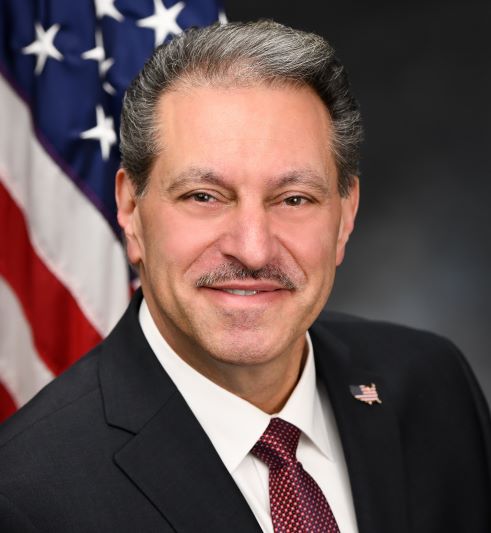
Sponsor: ADDABBO
Law Section: Education Law
Law: Amd SS3004 & 4402, Ed L
Co-sponsor(s):
SAMPSON
Committee: EDUCATION
Law Section: Education Law
Law: Amd SS3004 & 4402, Ed L
S2496-2013 Actions
- Jan 17, 2013: REFERRED TO EDUCATION
S2496-2013 Memo
BILL NUMBER:S2496 TITLE OF BILL: An act to amend the education law, in relation to the certification or training of teachers, administrators and instructors in the area of dyslexia and related disorders PURPOSE OR GENERAL IDEA OF BILL: This bill would require school districts to diagnose students with dyslexia and to provide such students with teachers trained to instruct dyslexic students. SUMMARY OF SPECIFIC PROVISIONS: Section one amends section 3004 of the education law to authorize the commissioner of education to certify or the required training of teachers and school administrators in the area of dyslexia and related disorders. The section also provides a definition for dyslexia. Section two amends section 4402 of the education law to provide that if a committee or subcommittee of special education believes that a student may be suffering from dyslexia, the student must be sent to an evaluation for dyslexia or related disorder. Section three amends section 4402 of the education law to provide that if a student is determined to have dyslexia, the recommendations on programs or placement for the student must be made by a team that is knowledgeable in instructing children with dyslexia. Section four amends section 4402 of the education law to require a school district to provide a teacher trained in dyslexia to any student who has been determined to suffer from dyslexia. Section five provides that this act shall take effect 30 days after it has become law. JUSTIFICATION: A lot happens in the brain as we learn to read. It becomes a complicated and daunting task when letters and numbers become mixed up. Approximately 15% of children have dyslexia, a brain based learning disability that makes word recognition, spelling and reading success a very difficult task. About 85% of children with learning disabilities have dyslexia making it the most prevalent learning disability in children. Yet, most parents and teachers have trouble recognizing its symptoms. Research shows that if students are not reading on grade level by third grade, they only have a 1 in 8 chance of catching up to their peers. This means not only academic consequences, but also emotional and social problems as well. The key to overcoming this disability is to pinpoint the disability early so that these children can become proficient readers and do not fall behind their peers. Because of the way the law is written currently students with dyslexia are broadly labeled as learning disabled. This puts in order costly and usually ineffective interventions which do not address the key issues for students with dyslexia. Students with dyslexia need appropriate intervention for their specific disability rather than broad help in school to address the problem at hand. Meaning that our teachers must have expert approaches when helping struggling students learn to read, write and spell. Students with dyslexia could receive appropriate remediation within an inclusion classroom or in an after school program where multi-sensory reading instruction takes place. The consequences of an inadequate education have a huge impact on our society. Children need the basic ability to read and write to become successful members of society. This legislation will improve school conditions so that children with dyslexia and related learning disabilities can have an equal opportunity to learn. In the long run, it will help save the state money and improve the lives of the many students in our state affected with this disability. PRIOR LEGISLATIVE HISTORY: A9940 (57797) of 2012. In Higher Ed FISCAL IMPLICATIONS TO STATE AND LOCAL GOVERNMENT: To be determined. EFFECTIVE DATE: 30 days following enactment.
S2496-2013 Text
S T A T E O F N E W Y O R K
________________________________________________________________________
S. 2496 A. 2775
2013-2014 Regular Sessions
SENATE - ASSEMBLY
January 17, 2013
___________
IN SENATE -- Introduced by Sen. ADDABBO -- read twice and ordered print-
ed, and when printed to be committed to the Committee on Education
IN ASSEMBLY -- Introduced by M. of A. BRENNAN, MILLMAN, ABINANTI,
BOYLAND, CASTRO, MARKEY, MILLER, STEVENSON, TITONE -- Multi-Sponsored
by -- M. of A. CLARK, HOOPER, McDONOUGH, PAULIN, SCARBOROUGH, WEPRIN
-- read once and referred to the Committee on Higher Education
AN ACT to amend the education law, in relation to the certification or
training of teachers, administrators and instructors in the area of
dyslexia and related disorders
THE PEOPLE OF THE STATE OF NEW YORK, REPRESENTED IN SENATE AND ASSEM-
BLY, DO ENACT AS FOLLOWS:
Section 1. Section 3004 of the education law is amended by adding a
new subdivision 7 to read as follows:
7. A. NOTWITHSTANDING ANY OTHER PROVISION OF LAW, THE COMMISSIONER IS
AUTHORIZED AND EMPOWERED TO CERTIFY OR REQUIRE TRAINING OF TEACHERS,
ADMINISTRATORS AND INSTRUCTORS IN THE AREA OF DYSLEXIA AND ITS RELATED
DISORDERS. THE COMMISSIONER SHALL HAVE THE POWER TO PRESCRIBE THE NECES-
SARY REGULATIONS AND ESTABLISH SUCH PROGRAMS AND TRAINING RELATED TO THE
NEEDS OF CHILDREN WITH DYSLEXIA OR A RELATED DISORDER. SUCH PROGRAMS AND
TRAINING SHALL INCLUDE, BUT NOT BE LIMITED TO, SUCCESSFUL COMPLETION OF
SUFFICIENT HOURS OF COURSEWORK AND SUPERVISED CLINICAL EXPERIENCE, AS
DETERMINED BY THE COMMISSIONER TO BE EVIDENCE-BASED EFFECTIVE PROGRAMS,
SUCH AS MULTISENSORY STRUCTURED LANGUAGE EDUCATION OR OTHER SIMILAR
EDUCATION PROGRAMS FOR TEACHING CHILDREN AT RISK FOR BEING, OR DIAGNOSED
AS, DYSLEXIC OR A RELATED DISORDER. SUCH PROGRAMS OR TRAINING MAY BE
OBTAINED FROM AN INSTITUTION OR PROVIDER WHICH HAS BEEN APPROVED BY THE
DEPARTMENT TO PROVIDE SUCH PROGRAMS AND TRAINING.
B. FOR THE PURPOSES OF THIS SECTION, THE TERM "DYSLEXIA" SHALL MEAN A
SPECIFIC LEARNING DISORDER THAT IS NEUROLOGICAL IN ORIGIN AND THAT IS
CHARACTERIZED BY UNEXPECTED DIFFICULTIES WITH ACCURATE OR FLUENT WORD
EXPLANATION--Matter in ITALICS (underscored) is new; matter in brackets
[ ] is old law to be omitted.
LBD04592-01-3
S. 2496 2 A. 2775
RECOGNITION AND BY POOR SPELLING AND DECODING ABILITIES NOT CONSISTENT
WITH THE PERSON'S INTELLIGENCE, MOTIVATION, AND SENSORY CAPABILITIES,
WHICH DIFFICULTIES TYPICALLY RESULT FROM A DEFICIT IN THE PHONOLOGICAL
COMPONENT OF LANGUAGE.
S 2. Clause (a) and subclause (i) of clause (b) of subparagraph 3 of
paragraph b of subdivision 1 of section 4402 of the education law,
clause (a) as amended by chapter 53 of the laws of 1991 and subclause
(i) of clause (b) as amended by chapter 378 of the laws of 2007, are
amended to read as follows:
(a) Obtain, review and evaluate all relevant information, including
but not limited to that presented by the parent, person in parental
relationship and teacher, pertinent to each child suspected of or iden-
tified as having a handicapping condition, including the results of a
physical examination performed in accordance with sections nine hundred
three, nine hundred four and nine hundred five of this chapter and,
where determined to be necessary by a school psychologist, an appropri-
ate psychological evaluation performed by a qualified private or school
psychologist, and other appropriate assessments as necessary to ascer-
tain the physical, mental, emotional and cultural-educational factors
which may contribute to the suspected or identified handicapping condi-
tion, and all other school data which bear on the child's progress,
including, where appropriate, observation of classroom performance. IF
THE COMMITTEE OR SUBCOMMITTEE HAS REASON TO BELIEVE THAT THE HANDICAP-
PING CONDITION MAY INVOLVE DYSLEXIA, AS DEFINED IN PARAGRAPH B OF SUBDI-
VISION SEVEN OF SECTION THREE THOUSAND FOUR OF THIS CHAPTER, OR A
RELATED DISORDER, THE CHILD SHALL BE EVALUATED AND TESTED ACCORDING TO
CURRENT SCIENTIFIC UNDERSTANDING OF DYSLEXIA TO DETERMINE WHETHER THE
CHILD HAS DYSLEXIA OR A RELATED DISORDER.
(i) Make recommendations based upon a written evaluation setting forth
the reasons for the recommendations, to the child's parent or person in
parental relation and board of education or trustees as to appropriate
educational programs and placement in accordance with the provisions of
subdivision six of section forty-four hundred one-a of this article, and
as to the advisability of continuation, modification, or termination of
special class or program placements which evaluation shall be furnished
to the child's parent or person in parental relation together with the
recommendations provided, however that the committee may recommend a
placement in a school which uses psychotropic drugs only if such school
has a written policy pertaining to such use that is consistent with
subdivision four-a of section thirty-two hundred eight of this chapter
and that the parent or person in parental relation is given such written
policy at the time such recommendation is made. IF THE CHILD IS DETER-
MINED TO HAVE DYSLEXIA, AS DEFINED IN PARAGRAPH B OF SUBDIVISION SEVEN
OF SECTION THREE THOUSAND FOUR OF THIS CHAPTER, OR A RELATED DISORDER,
THE RECOMMENDATIONS SHALL BE MADE BY A TEAM THAT IS KNOWLEDGEABLE IN THE
CURRENT SCIENTIFIC UNDERSTANDING OF DYSLEXIA, INCLUDING THE INSTRUC-
TIONAL COMPONENTS AND APPROACHES FOR STUDENTS WITH DYSLEXIA. If such
recommendation is not acceptable to the parent or person in parental
relation, such parent or person in parental relation may appeal such
recommendation as provided for in section forty-four hundred four of
this [chapter] ARTICLE.
S 3. Clause (b) of subparagraph 3 of paragraph b of subdivision 1 of
section 4402 of the education law, as amended by chapter 716 of the laws
of 1991, is amended to read as follows:
(b) Make recommendations based upon a written evaluation setting forth
the reasons for the recommendations, to the child's parent or person in
S. 2496 3 A. 2775
parental relationship and board of education or trustees as to appropri-
ate educational programs and placement in accordance with the provisions
of subdivision six of section forty-four hundred one-a of this article,
and as to the advisability of continuation, modification, or termination
of special class or program placements which evaluation shall be
furnished to the child's parent or person in parental relationship
together with the recommendations provided, however that the committee
may recommend a placement in a school which uses psychotropic drugs only
if such school has a written policy pertaining to such use and that the
parent or person in parental relationship is given such written policy
at the time such recommendation is made. IF THE CHILD IS DETERMINED TO
HAVE DYSLEXIA, AS DEFINED IN PARAGRAPH B OF SUBDIVISION SEVEN OF SECTION
THREE THOUSAND FOUR OF THIS CHAPTER, OR A RELATED DISORDER, THE RECOM-
MENDATIONS SHALL BE MADE BY A TEAM THAT IS KNOWLEDGEABLE IN THE INSTRUC-
TIONAL COMPONENTS AND APPROACHES FOR STUDENTS WITH DYSLEXIA. If such
recommendation is not acceptable to the parent or person in parental
relationship, such parent or person in parental relationship may appeal
such recommendation as provided for in section forty-four hundred four
of this [chapter] ARTICLE.
S 4. Paragraph a of subdivision 2 of section 4402 of the education
law, as amended by chapter 243 of the laws of 1989, is amended to read
as follows:
a. The board of education or trustees of each school district shall be
required to furnish suitable educational opportunities for children with
handicapping conditions by one of the special services or programs list-
ed in subdivision two of section forty-four hundred one OF THIS ARTICLE.
The need of the individual child shall determine which of such services
shall be rendered. IF THE CHILD IS A CHILD WITH DYSLEXIA OR A RELATED
DISORDER, THE DISTRICT SHALL BE REQUIRED TO PROVIDE TO SUCH CHILD THE
SERVICES OF A TEACHER OR INSTRUCTOR TRAINED IN DYSLEXIA AND RELATED
DISORDERS PURSUANT TO SUBDIVISION SEVEN OF SECTION THREE THOUSAND FOUR
OF THIS CHAPTER. Each district shall provide to the maximum extent
appropriate such services in a manner which enables children with handi-
capping conditions to participate in regular education services when
appropriate. Such services or programs shall be furnished between the
months of September and June of each year, except that for the nineteen
hundred eighty-seven--eighty-eight school year and thereafter, with
respect to the students whose handicapping conditions are severe enough
to exhibit the need for a structured learning environment of twelve
months duration to maintain developmental levels, the board of education
or trustees of each school district upon the recommendation of the
committee on special education and, in the first instance, the consent
of the parent shall also provide, either directly or by contract, for
the provision of special services and programs as defined in section
forty-four hundred one of this article during the months of July and
August as contained in the individualized education program for each
eligible child, and with prior approval by the commissioner if required;
provided that (i) a student with a handicapping condition who is first
eligible to attend public school in the nineteen hundred eighty-seven--
eighty-eight school year shall not be eligible to receive services
pursuant to this paragraph during the months of July and August nineteen
hundred eighty-seven and (ii) a student with a handicapping condition
who is first eligible to attend public school in the nineteen hundred
eighty-eight--eighty-nine school year shall not be eligible to receive
services pursuant to this paragraph during the months of July and August
nineteen hundred eighty-eight and (iii) a student with a handicapping
S. 2496 4 A. 2775
condition who is eligible for services during the months of July and
August nineteen hundred eighty-nine pursuant to the provisions of subdi-
vision six of section forty-four hundred ten of this article shall not
be eligible to receive services pursuant to this paragraph during such
months and (iv) a student with a handicapping condition who is eligible
for services, including services during the months of July and August,
pursuant to section forty-four hundred ten of this article shall not be
eligible to receive services pursuant to this paragraph during the
months of July and August.
S 5. This act shall take effect on the thirtieth day after it shall
have become a law, provided that the amendments to subclause (i) of
clause (b) of subparagraph 3 of paragraph b of subdivision 1 of section
4402 of the education law made by section two of this act shall be
subject to the expiration and reversion of such clause pursuant to
section 22 of chapter 352 of the laws of 2005, as amended, and subdivi-
sion d of section 27 of chapter 378 of the laws of 2007, as amended,
when upon such date the provisions of section three of this act shall
take effect.

Open Legislation comments facilitate discussion of New York State legislation. All comments are subject to moderation. Comments deemed off-topic, commercial, campaign-related, self-promotional; or that contain profanity or hate speech; or that links to sites outside of the nysenate.gov domain are not permitted, and will not be published. Comment moderation is generally performed Monday through Friday.
*By contributing or voting you agree to the Terms of Participation and Privacy Policy and verify you are over 13.
Discuss!
blog comments powered by Disqus