|
Assembly Actions -
Lowercase Senate Actions - UPPERCASE |
|
|---|---|
| Jun 03, 2014 |
reported and committed to finance |
| Jan 08, 2014 |
referred to labor |
| Jun 03, 2013 |
reported and committed to finance |
| Feb 12, 2013 |
referred to labor |
Senate Bill S3715
2013-2014 Legislative Session
Sponsored By

(D, IP) Senate District
Archive: Last Bill Status - In Senate Committee Finance Committee
- Introduced
-
- In Committee Assembly
- In Committee Senate
-
- On Floor Calendar Assembly
- On Floor Calendar Senate
-
- Passed Assembly
- Passed Senate
- Delivered to Governor
- Signed By Governor
Actions
Votes
co-Sponsors
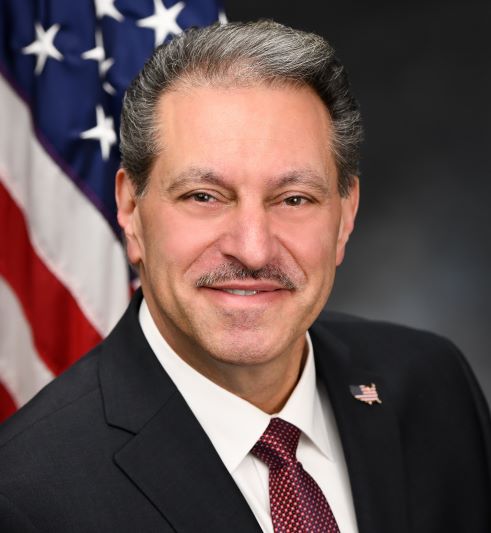
(D) 15th Senate District

(D) Senate District

(R) Senate District
(D) Senate District

2013-S3715 (ACTIVE) - Details
2013-S3715 (ACTIVE) - Sponsor Memo
                                BILL NUMBER:S3715

TITLE OF BILL:  An act to amend the labor law and the education law, in
relation to enacting the "charter schools construction fair wages act"

PURPOSE OR GENERAL IDEA OF BILL:  This would require that employees who
build or care for and maintain charter schools are paid prevailing wages
for their services.

SUMMARY OF SPECIFIC PROVISIONS:

Sections 1 and 2 of the bill amend section 220(2) of the labor law to
extend prevailing wage requirements to public work projects by charter
schools. Prevailing wage requirements would also be extended to leases,
grants, bonds, covenants, debt agreements, and permits entered into for
public work.

Section 3 of the bill amends subdivision 3(a) of section 2853 of the
education law to require competitive bidding on charter school contracts
and to require payment of prevailing wages for construction and building
service work.

Section 4 of the bill establishes the effective date.

EXISTING LAW:  Article 8 of the labor law requires the payment of
prevailing wages for any public work contract entered into by the state,
2013-S3715 (ACTIVE) - Bill Text download pdf
                    S T A T E   O F   N E W   Y O R K
________________________________________________________________________

                                  3715

                       2013-2014 Regular Sessions

                            I N  S E N A T E

                            February 12, 2013
                               ___________

Introduced  by  Sen.  SAVINO -- read twice and ordered printed, and when
  printed to be committed to the Committee on Labor

AN ACT to amend the labor law and the  education  law,  in  relation  to
  enacting the "charter schools construction fair wages act"

  THE  PEOPLE OF THE STATE OF NEW YORK, REPRESENTED IN SENATE AND ASSEM-
BLY, DO ENACT AS FOLLOWS:

  Section 1. Short title. This act shall be known and may  be  cited  as
the "charter schools construction fair wages act".
  S  2.  Subdivision  2  of  section 220 of the labor law, as amended by
chapter 678 of the laws of 2007, is amended to read as follows:
  2. Each contract, LEASE, GRANT, BOND,  COVENANT,  DEBT  AGREEMENT,  OR
PERMIT,  to which the state or a public benefit corporation or a munici-
pal corporation or a commission appointed pursuant to law OR  AN  EDUCA-
TION  CORPORATION  ORGANIZED TO OPERATE A CHARTER SCHOOL is a party, and
any contract for public work entered into by a  third  party  acting  in
place  of, on behalf of and for the benefit of such public entity pursu-
ant to any lease, permit or other agreement between such third party and
the public entity, and which may involve  the  employment  of  laborers,
workers or mechanics shall contain a stipulation that no laborer, worker
or  mechanic  in  the  employ  of the contractor, subcontractor or other
person doing or contracting to do the  whole  or  a  part  of  the  work
contemplated by the contract shall be permitted or required to work more
than  eight  hours in any one calendar day or more than five days in any
one week except in cases  of  extraordinary  emergency  including  fire,
flood or danger to life or property. No such person shall be so employed
more  than eight hours in any day or more than five days in any one week
except in such emergency. Extraordinary emergency within the meaning  of
this  section  shall be deemed to include situations in which sufficient
laborers, workers and mechanics cannot be employed to  carry  on  public
work  expeditiously  as a result of such restrictions upon the number of
hours and days of labor and the immediate commencement or prosecution or

 EXPLANATION--Matter in ITALICS (underscored) is new; matter in brackets
                      [ ] is old law to be omitted.
                                                           LBD05053-01-3
Comments
Open Legislation is a forum for New York State legislation. All comments are subject to review and community moderation is encouraged.
Comments deemed off-topic, commercial, campaign-related, self-promotional; or that contain profanity, hate or toxic speech; or that link to sites outside of the nysenate.gov domain are not permitted, and will not be published. Attempts to intimidate and silence contributors or deliberately deceive the public, including excessive or extraneous posting/posts, or coordinated activity, are prohibited and may result in the temporary or permanent banning of the user. Comment moderation is generally performed Monday through Friday. By contributing or voting you agree to the Terms of Participation and verify you are over 13.
Create an account. An account allows you to sign petitions with a single click, officially support or oppose key legislation, and follow issues, committees, and bills that matter to you. When you create an account, you agree to this platform's terms of participation.