|
Assembly Actions -
Lowercase Senate Actions - UPPERCASE |
|
|---|---|
| Jun 17, 2014 |
referred to codes delivered to assembly passed senate ordered to third reading cal.1422 committee discharged and committed to rules |
| Jan 08, 2014 |
referred to codes returned to senate died in assembly |
| Jun 04, 2013 |
referred to codes delivered to assembly passed senate |
| May 21, 2013 |
ordered to third reading cal.710 committee discharged and committed to rules |
| Jan 09, 2013 |
referred to codes |
Senate Bill S373
2013-2014 Legislative Session
Sponsored By
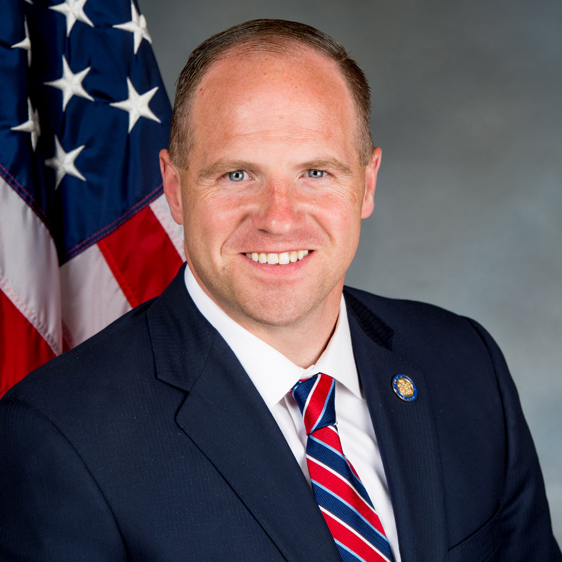
(D, WF) 63rd Senate District
Archive: Last Bill Status - In Assembly Committee
- Introduced
-
- In Committee Assembly
- In Committee Senate
-
- On Floor Calendar Assembly
- On Floor Calendar Senate
-
- Passed Assembly
- Passed Senate
- Delivered to Governor
- Signed By Governor
Actions
Votes
co-Sponsors

(D) Senate District

(D, WF) 28th Senate District
2013-S373 (ACTIVE) - Details
- See Assembly Version of this Bill:
- A2898
- Current Committee:
- Assembly Codes
- Law Section:
- Penal Law
- Laws Affected:
- Amd §§155.00 & 155.05, Pen L
- Versions Introduced in Other Legislative Sessions:
-
2009-2010:
S8105, A4163
2011-2012: S4725, A2374
2015-2016: S1417, A4467, A9974
2017-2018: S660
2019-2020: S587
2021-2022: S5112
2023-2024: S5708
2013-S373 (ACTIVE) - Sponsor Memo
                                BILL NUMBER:S373

TITLE OF BILL:
An act
to amend the penal law, in relation to financial exploitation of the
elderly and disabled

PURPOSE:
This bill will allow prosecutions for financial abuse of senior
citizens by amending the Penal Law to add a new crime of financial
exploitation of the elderly or disabled.

SUMMARY OF SPECIFIC PROVISIONS:
This bill amends section 155.00 of the New York State Penal Law by
adding a new paragraph regarding "Financial Exploitation of the
Elderly and Disabled."

Elderly means any person who is 60 years of age or older who is also
suffering from a disease or infirmity associated with advanced age.
Disabled means any person who suffers from permanent physical or
mental impairment as a result of a disease, injury, functional
disorder or congenital condition to the extent that that person is
incapable of preventing or avoiding the commission of a larceny
against himself or herself.

A person in a position of trust is defined as any person who is the
2013-S373 (ACTIVE) - Bill Text download pdf
                    S T A T E   O F   N E W   Y O R K
________________________________________________________________________

                                   373

                       2013-2014 Regular Sessions

                            I N  S E N A T E

                               (PREFILED)

                             January 9, 2013
                               ___________

Introduced  by  Sen. KENNEDY -- read twice and ordered printed, and when
  printed to be committed to the Committee on Codes

AN ACT to amend the penal law, in relation to financial exploitation  of
  the elderly and disabled

  THE  PEOPLE OF THE STATE OF NEW YORK, REPRESENTED IN SENATE AND ASSEM-
BLY, DO ENACT AS FOLLOWS:

  Section 1. Section 155.00 of the penal law is amended by  adding  four
new subdivisions 10, 11, 12 and 13 to read as follows:
  10.  "ELDERLY" MEANS ANY PERSON WHO IS SIXTY YEARS OF AGE OR OLDER AND
IS SUFFERING FROM A DISEASE OR INFIRMITY ASSOCIATED WITH  ADVANCED  AGE,
WHICH  IS  MANIFESTED BY PHYSICAL, MENTAL OR EMOTIONAL DYSFUNCTIONING TO
THE EXTENT THAT SUCH PERSON IS INCAPABLE OF AVOIDING OR  PREVENTING  THE
COMMISSION OF A LARCENY AGAINST HIMSELF OR HERSELF.
  11.  "DISABLED" MEANS ANY PERSON WHO SUFFERS FROM A PERMANENT PHYSICAL
OR MENTAL IMPAIRMENT, AS A  RESULT  OF  A  DISEASE,  INJURY,  FUNCTIONAL
DISORDER  OR  CONGENITAL  CONDITION,  TO  THE EXTENT THAT SUCH PERSON IS
INCAPABLE OF AVOIDING OR PREVENTING THE COMMISSION OF A LARCENY  AGAINST
HIMSELF OR HERSELF.
  12. "PERSON IN A POSITION OF TRUST" MEANS A PERSON WHO:
  (A)  IS  THE PARENT, SPOUSE, ADULT CHILD OR OTHER RELATIVE BY BLOOD OR
AFFINITY OF AN ELDERLY OR DISABLED PERSON; OR
  (B) IS A JOINT TENANT OR TENANT IN COMMON WITH AN ELDERLY OR  DISABLED
PERSON; OR
  (C) HAS A FIDUCIARY OBLIGATION TO AN ELDERLY OR DISABLED PERSON; OR
  (D)  RECEIVES  MONETARY  OR OTHER VALUABLE CONSIDERATION FOR PROVIDING
CARE FOR THE ELDERLY OR DISABLED PERSON; OR
  (E) LIVES WITH OR PROVIDES SOME COMPONENT OF HOME CARE SERVICES  ON  A
CONTINUING  BASIS  TO  THE ELDERLY OR DISABLED PERSON INCLUDING, BUT NOT
LIMITED TO, A NEIGHBOR OR FRIEND WHO DOES NOT PROVIDE SUCH SERVICES  BUT
HAS ACCESS TO THE ELDERLY OR DISABLED PERSON BASED ON SUCH RELATIONSHIP.

 EXPLANATION--Matter in ITALICS (underscored) is new; matter in brackets
                      [ ] is old law to be omitted.
Comments
Open Legislation is a forum for New York State legislation. All comments are subject to review and community moderation is encouraged.
Comments deemed off-topic, commercial, campaign-related, self-promotional; or that contain profanity, hate or toxic speech; or that link to sites outside of the nysenate.gov domain are not permitted, and will not be published. Attempts to intimidate and silence contributors or deliberately deceive the public, including excessive or extraneous posting/posts, or coordinated activity, are prohibited and may result in the temporary or permanent banning of the user. Comment moderation is generally performed Monday through Friday. By contributing or voting you agree to the Terms of Participation and verify you are over 13.
Create an account. An account allows you to sign petitions with a single click, officially support or oppose key legislation, and follow issues, committees, and bills that matter to you. When you create an account, you agree to this platform's terms of participation.