|
Assembly Actions -
Lowercase Senate Actions - UPPERCASE |
|
|---|---|
| Mar 12, 2012 |
committee discharged and committed to rules |
| Mar 08, 2012 |
notice of committee consideration - requested |
| Jan 04, 2012 |
referred to labor |
| Jan 05, 2011 |
referred to labor |
Senate Bill S727
2011-2012 Legislative Session
Sponsored By
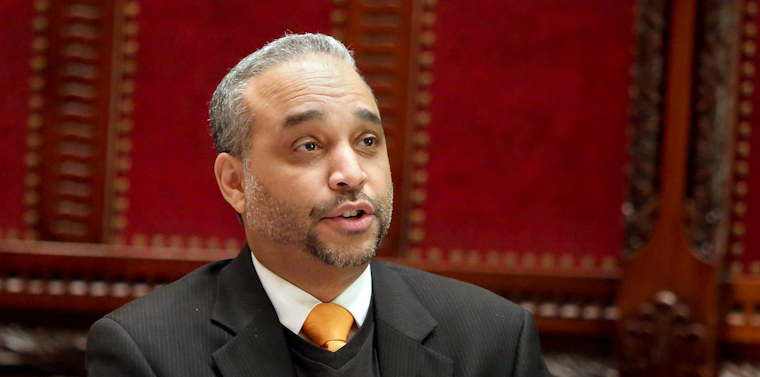
(D, WF) Senate District
Archive: Last Bill Status - In Senate Committee Rules Committee
- Introduced
-
- In Committee Assembly
- In Committee Senate
-
- On Floor Calendar Assembly
- On Floor Calendar Senate
-
- Passed Assembly
- Passed Senate
- Delivered to Governor
- Signed By Governor
Actions
co-Sponsors
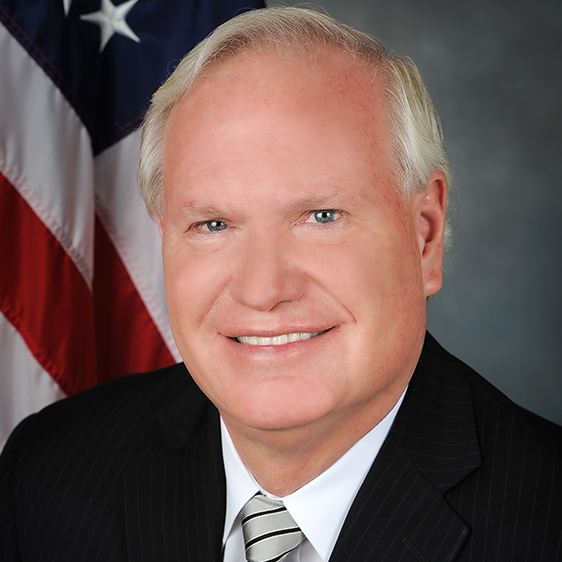
(D) Senate District

(D, WF) 28th Senate District
(D, WF) 21st Senate District
2011-S727 (ACTIVE) - Details
2011-S727 (ACTIVE) - Sponsor Memo
                                BILL NUMBER:S727

TITLE OF BILL:
An act
to amend the labor law, in relation to unemployment insurance benefits
for professional employment by certain education institutions

PURPOSE:
This legislation will ensure that professionals employed in two-year
and four-year colleges who are not given reasonable assurance of
continued employment will be eligible for unemployment insurance
during periods of unemployment.

SUMMARY OF PROVISIONS:
The bill adds a new paragraph (d) to Labor Law section 590(10) to
clarify that employees performing in a principal, administrative,
research or instructional position at two-year and four-year colleges
and universities in New York are presumed not to have reasonable
assurance of continued employment when their positions are
conditioned on enrollment, funding or program changes. They would be
eligible for unemployment benefits during periods of unemployment
unless their employer provides sufficient documentation to overcome
this presumption. An employer's letter stating that employment is
conditional would not constitute prima facie evidence of reasonable
assurance.
2011-S727 (ACTIVE) - Bill Text download pdf
                    S T A T E   O F   N E W   Y O R K
________________________________________________________________________

                                   727

                       2011-2012 Regular Sessions

                            I N  S E N A T E

                               (PREFILED)

                             January 5, 2011
                               ___________

Introduced  by  Sen. PERALTA -- read twice and ordered printed, and when
  printed to be committed to the Committee on Labor

AN ACT to amend the labor law, in  relation  to  unemployment  insurance
  benefits for professional employment by certain education institutions

  THE  PEOPLE OF THE STATE OF NEW YORK, REPRESENTED IN SENATE AND ASSEM-
BLY, DO ENACT AS FOLLOWS:

  Section 1. Subdivision 10 of section 590 of the labor law  is  amended
by adding a new paragraph (d) to read as follows:
  (D)  IN THE CASE OF COLLEGES OR UNIVERSITIES ASSIGNED THE NORTH AMERI-
CAN INDUSTRY CLASSIFICATION CODE 611310 OR 611210 FOR SERVICES PERFORMED
IN A PRINCIPAL, ADMINISTRATIVE, RESEARCH  OR  INSTRUCTIONAL  CAPACITY  A
PERSON  IS PRESUMED NOT TO HAVE REASONABLE ASSURANCE UNDER AN OFFER THAT
IS CONDITIONED ON ENROLLMENT, FUNDING OR PROGRAMMATIC CHANGES. IT IS THE
EMPLOYER'S BURDEN TO PROVIDE SUFFICIENT DOCUMENTATION TO  OVERCOME  THIS
PRESUMPTION.  REASONABLE  ASSURANCE MUST BE DETERMINED ON A CASE-BY-CASE
BASIS BY THE TOTAL WEIGHT OF EVIDENCE RATHER THAN THE EXISTENCE  OF  ANY
ONE  FACTOR. PRIMARY WEIGHT MUST BE GIVEN TO THE CONTINGENT NATURE OF AN
OFFER OF EMPLOYMENT BASED ON ENROLLMENT, FUNDING  AND  PROGRAM  CHANGES.
PROVIDED, HOWEVER, THAT IN ANY UNEMPLOYMENT INSURANCE PROCEEDING A WRIT-
TEN LETTER FROM AN EMPLOYER TO AN EMPLOYEE WHICH MAKES EMPLOYMENT CONDI-
TIONAL  SHALL  NOT BE PRIMA FACIE EVIDENCE OF REASONABLE ASSURANCE TO BE
USED TO DENY A CLAIM FOR UNEMPLOYMENT.
  S 2. This act shall take effect immediately.


 EXPLANATION--Matter in ITALICS (underscored) is new; matter in brackets
                      [ ] is old law to be omitted.
                                                           LBD00773-01-1
Comments
Open Legislation is a forum for New York State legislation. All comments are subject to review and community moderation is encouraged.
Comments deemed off-topic, commercial, campaign-related, self-promotional; or that contain profanity, hate or toxic speech; or that link to sites outside of the nysenate.gov domain are not permitted, and will not be published. Attempts to intimidate and silence contributors or deliberately deceive the public, including excessive or extraneous posting/posts, or coordinated activity, are prohibited and may result in the temporary or permanent banning of the user. Comment moderation is generally performed Monday through Friday. By contributing or voting you agree to the Terms of Participation and verify you are over 13.
Create an account. An account allows you to sign petitions with a single click, officially support or oppose key legislation, and follow issues, committees, and bills that matter to you. When you create an account, you agree to this platform's terms of participation.