|
Assembly Actions -
Lowercase Senate Actions - UPPERCASE |
|
|---|---|
| Jan 08, 2014 |
referred to local government |
| Jan 09, 2013 |
referred to local government |
Senate Bill S878
2013-2014 Legislative Session
Sponsored By
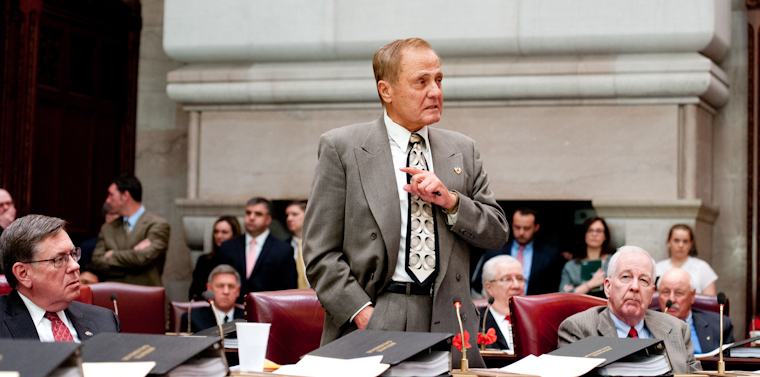
(R, C, IP) Senate District
Archive: Last Bill Status - In Senate Committee Local Government Committee
- Introduced
-
- In Committee Assembly
- In Committee Senate
-
- On Floor Calendar Assembly
- On Floor Calendar Senate
-
- Passed Assembly
- Passed Senate
- Delivered to Governor
- Signed By Governor
Actions
co-Sponsors
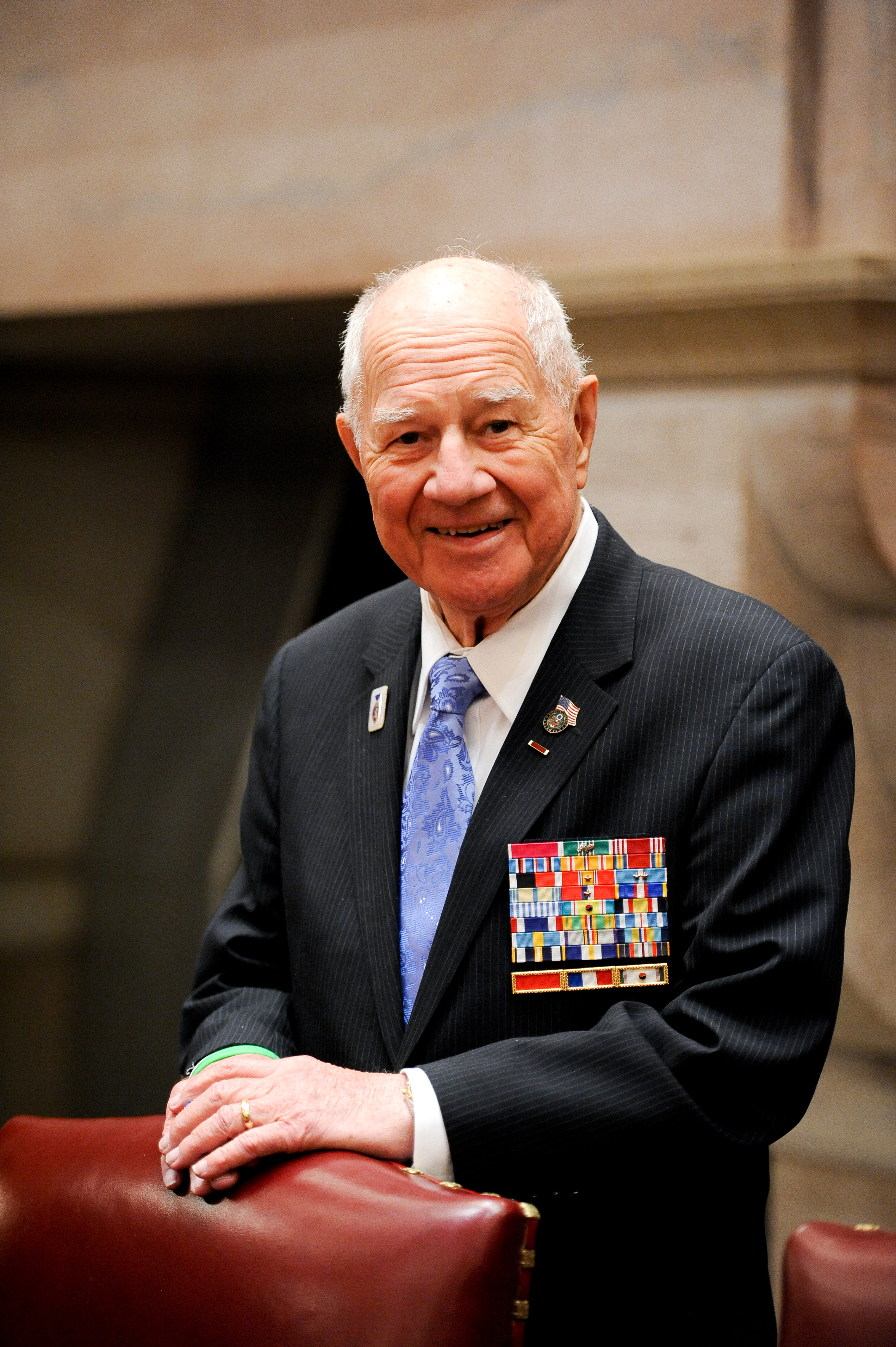
(R, C) Senate District
2013-S878 (ACTIVE) - Details
- See Assembly Version of this Bill:
- A1271
- Current Committee:
- Senate Local Government
- Law Section:
- Real Property Tax Law
- Laws Affected:
- Amd §420-a, RPT L
- Versions Introduced in Other Legislative Sessions:
-
2009-2010:
S8474, A908
2011-2012: S2545, A417
2015-2016: S1372, A1826
2017-2018: S996, A539
2019-2020: S2606, A3655
2021-2022: S1954, A145
2023-2024: A1343
2013-S878 (ACTIVE) - Sponsor Memo
                                BILL NUMBER:S878

TITLE OF BILL:
An act
to amend the real property tax law, in relation to the exemption from
taxation for non-profit organizations

PURPOSE:
To place the responsibility of annually establishing that a
not-for-profit corporation or association is entitled to real
property tax exemptions upon such corporation or association.

SUMMARY OF PROVISIONS:

Section 1: Amends section 420-a of the Real Property Tax Law by adding
a new subdivision 15 to require that the owner of a property which is
tax exempt pursuant to section 420-a of the Real Property Tax Law,
prove annually, by clear and convincing evidence, that the
requirements of section 420-a have been satisfied. Further, this new
subdivision provides that the New York State Department of Taxation
and Finance shall develop, in consultation with not-for-profit
organizations and assessors, guidance documents which shall be used
by assessors to determine whether the standard of proof has been met.

Section 2: Effective date.
2013-S878 (ACTIVE) - Bill Text download pdf
                    S T A T E   O F   N E W   Y O R K
________________________________________________________________________

                                   878

                       2013-2014 Regular Sessions

                            I N  S E N A T E

                               (PREFILED)

                             January 9, 2013
                               ___________

Introduced  by  Sens. BONACIC, LARKIN -- read twice and ordered printed,
  and when printed to be committed to the Committee on Local Government

AN ACT to amend the real property tax law, in relation to the  exemption
  from taxation for non-profit organizations

  THE  PEOPLE OF THE STATE OF NEW YORK, REPRESENTED IN SENATE AND ASSEM-
BLY, DO ENACT AS FOLLOWS:

  Section 1.  Section 420-a of the real property tax law is  amended  by
adding a new subdivision 15 to read as follows:
  15.  IN  ALL  INSTANCES,  THE BURDEN OF ANNUALLY ESTABLISHING THAT THE
REQUIREMENTS OF THIS SECTION HAVE BEEN SATISFIED SHALL BE UPON THE OWNER
OF THE PROPERTY AND MUST BE PROVEN BY CLEAR AND CONVINCING EVIDENCE. THE
DEPARTMENT SHALL DEVELOP, IN CONSULTATION WITH NOT-FOR-PROFIT  ORGANIZA-
TIONS  AND  ASSESSORS,  GUIDANCE  DOCUMENTS  TO  BE USED BY ASSESSORS IN
DETERMINING WHETHER THE STANDARD OF PROOF ESTABLISHED BY  THIS  SUBDIVI-
SION HAS BEEN MET.
  S  2. This act shall take effect on the first of January next succeed-
ing the date on which it shall have become a  law  and  shall  apply  to
assessment rolls prepared on the basis of taxable status dates occurring
on or after such date.


 EXPLANATION--Matter in ITALICS (underscored) is new; matter in brackets
                      [ ] is old law to be omitted.
                                                           LBD02372-01-3
Comments
Open Legislation is a forum for New York State legislation. All comments are subject to review and community moderation is encouraged.
Comments deemed off-topic, commercial, campaign-related, self-promotional; or that contain profanity, hate or toxic speech; or that link to sites outside of the nysenate.gov domain are not permitted, and will not be published. Attempts to intimidate and silence contributors or deliberately deceive the public, including excessive or extraneous posting/posts, or coordinated activity, are prohibited and may result in the temporary or permanent banning of the user. Comment moderation is generally performed Monday through Friday. By contributing or voting you agree to the Terms of Participation and verify you are over 13.
Create an account. An account allows you to sign petitions with a single click, officially support or oppose key legislation, and follow issues, committees, and bills that matter to you. When you create an account, you agree to this platform's terms of participation.